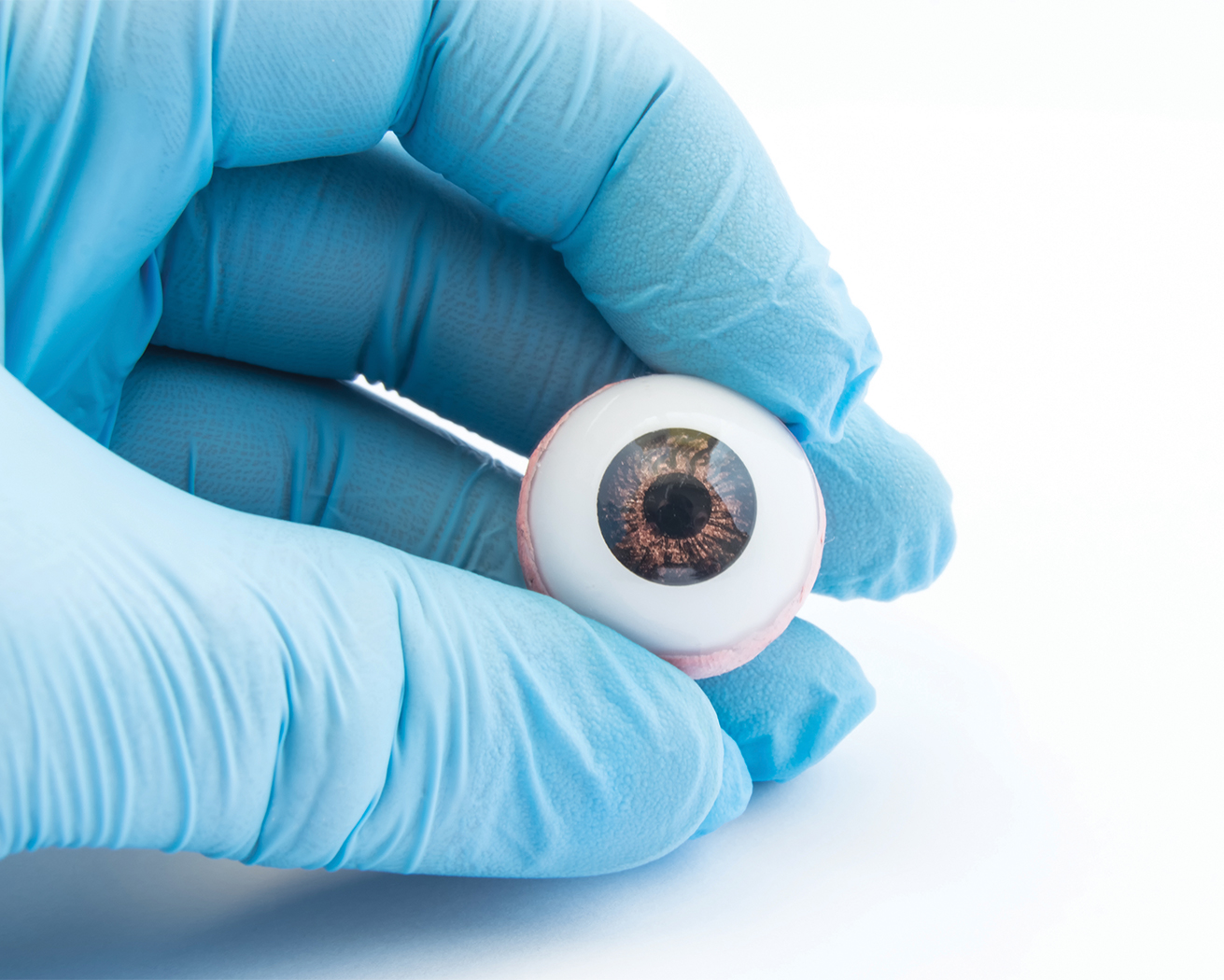
Phthisic eye refers to a condition where the eyeball shrinks and shrivels due to disease or trauma. In such cases, it is possible to apply a prosthesis without removing the eye. The phthisic eye prosthesis is also referred to as a scleral shell prosthesis.
So, what are the advantages of prosthesis in phthisic eyes?
What are the disadvantages of phthisic eye prosthesis?
Even if you decide to get a phthisic eye prosthesis, it is important to start the process by consulting a specialist. This will help determine the best option for both you and your eye health.
Phthisic eye prostheses have a structure that highly matches all the features of the patient’s eye socket, providing a natural appearance and high comfort. Therefore, the ideal prosthesis for patients with phthisic eyes is a custom-made prosthetic eye. So, how are the most compatible prostheses custom-made?
Custom prostheses are produced by taking into account not only the measurements from the patient’s eye socket but also other aesthetic details of the person (iris color, vascular structure, eye shape). This ensures that the prosthesis gains a natural appearance and provides optimal comfort. Additionally, since it is designed to be compatible with the other eye, it gives results that will please the patient both in terms of symmetry and natural aesthetics.
All custom-made prostheses can look like new with proper placement and regular care. This is especially important considering the continuous use of the prosthetic eye and the anatomical changes that might occur in the patient.
Custom-made prostheses for phthisic eyes have limited movement capabilities similar to those provided by the healthy eye. However, this movement ability cannot be compared to the flexibility of a natural eye. Let’s explore the details together.
Phthisic eye prostheses; usually, with the help of an orbital implant placed at the bottom and muscles, can move, although not like a natural eye. The main purpose of enabling this movement is to give the patient a better fit with facial expressions and provide an aesthetic appearance. Additionally, using the correct surgical technique helps the eye to move slightly. Choosing the right implant will also contribute to the slight movements of the prosthetic eye.
As a result, prosthetic eyes in phthisic eyes are custom-made to fit perfectly into the eye socket, but they will never provide the same movement capability as a natural eye. With optimal fit and limited movement, the patient can continue life.
The production of a phthisic eye prosthesis involves a custom-made process, depending on the shape of the patient’s eye socket and aesthetic expectations. Let’s go through the preparation process together.
First, specialists assess the patient’s overall health and psychological condition, as well as the eye socket and surrounding tissues. This stage also involves listening to the patient’s expectations from the phthisic eye prosthesis.
The size, depth, and surrounding structures of the eye socket are examined and measured. Based on the measurements, the most accurate prosthetic eye model is prepared digitally or physically.
Acrylic is the most commonly used material in the production of prosthetic eyes today. The reason for choosing this material is its lightness, durability, and biocompatibility. The color of the healthy eye, iris pattern, and vascular structure are carefully examined, and the prosthesis is produced to give it a natural appearance.
Once the prosthetic eye is placed in the patient’s eye socket, it is tested for both comfort and aesthetic appearance. If there are any mismatches or discomforts in the placement or appearance of the prosthesis, adjustments are made to perfect it.
The doctor provides the patient with detailed information on how to use, clean, and maintain the prosthesis. After all tests are completed, the prosthetic eye is permanently placed, and the patient is discharged.
To ensure the long-lasting durability and aesthetic appearance of the prosthetic eye, regular check-ups by the doctor are recommended. The prosthetic eye should be cleaned with special cleaning lotions, ensuring it is free from protein and other residues.
First, stand in front of a mirror. Wash your hands with soap that does not contain oil, lotion, or perfume, and rinse them thoroughly with plenty of water. Dry them with a soft towel. Tilt your head forward and look into the mirror. To insert the prosthetic eye, first pull down the lower eyelid with one hand, then use the other hand to carefully place the prosthesis into the eye socket, making sure the upper part enters first. The placement of the upper part is important; be careful not to rush or make any hasty movements, as it may result in incorrect placement. Once you’re sure, you can gently release the lower eyelid.
Stand in front of a mirror. After washing your hands with natural soap that does not contain oil, lotion, or perfume, rinse them thoroughly with plenty of water. Dry your hands with a soft towel. Tilt your head forward and look into the mirror. Hold the lower eyelid and gently pull it down. Once you have made the lower edge of the prosthesis slide down, apply gentle pressure with your index finger to the bottom of the prosthesis. This will allow the prosthesis to come out easily.
When cleaning the removed prosthetic eye, absolutely no alcohol or chemical substances should be used. Baby shampoo or boiled saline water will be sufficient for cleaning. When the prosthesis is first placed in your eye socket, you may experience a slight discomfort or sensation of irritation. This is quite common and will pass on its own within a few hours to a few days, depending on the person.
Additionally, using artificial tears while wearing the prosthetic eye can be very helpful. It will assist with dryness or irritation if present. Some eye discharge may occur while using the prosthesis. You can easily clean these with wet cotton or eye wipes. However, if the discharge becomes excessive, it is important to consult your eye doctor.
Wearing glasses made of shatterproof glass will provide extra protection for patients using ocular prostheses. This practice will also contribute to the protection of the other eye.
Prosthetic eyes that do not fit the eye socket or the appearance of the other eye should not be preferred as they do not look aesthetically pleasing.
Larger prostheses placed in the eye socket can cause strain on the eyelids, and deformities that may occur on the lower eyelid (ectropion).
On the other hand, the use of smaller prostheses may lead to shrinkage in the eye socket over time, preventing the placement of an appropriate prosthesis later. Another downside is that smaller prostheses can cause drooping in the upper eyelid and aesthetic issues.
There is no need for surgery to place a prosthetic eye. Only before the procedure, a ball that gives volume and movement should be placed in the eye socket. This compensates for the volume loss that occurs when the eye is removed. This ball is covered with tissue because it will remain in place. The ocular prosthesis can then be placed into the eye socket within a maximum of two to four weeks. There will be no extra pain during the insertion or removal of the prosthetic eye. However, a slight tension may be felt in the eyelids.
There are essentially three different surgical methods, despite possible changes in surgical techniques or developments in medicine.
The first operation, called evisceration, involves leaving the white shell of the eyeball in place while the inside of the eye is emptied. A ball is placed into the empty space to maintain volume, and the white shell of the eye is closed.
In this operation, unlike the previous one, the eyeball, along with its white shell, is completely removed. The muscles that allow the eye to move and the fat tissue around the eye are left in place. Similarly, the eye muscles are sutured to the ball placed in the eye socket to ensure movement of the globe.
In the final operation, the eyeball, eyelids, and all surrounding tissues (from the eyebrow to the cheek area) are removed. Exenteration is mostly used for dangerous tumors in the eye area.
Ocular prostheses can sometimes be used without removing the eye. For example, in eyes that are smaller than normal (phthisis), a prosthetic eye can be placed over the existing eye. Of course, whether this application is suitable for the patient will be determined by the doctor’s examination.
The experiences of patients using ocular prostheses vary depending on the type of prosthesis, personal expectations, and the quality of the surgical process. It is important to remember that this process is unique to each individual, and the treatment method and prosthetic eye that will be suitable for you should be determined with your doctor. So, what are the general positive and negative reviews from users?
So, in both scenarios, when evaluating ocular prostheses, positive comments from users indicate that their quality of life has increased, and they have achieved positive aesthetic and psychological results. On the other hand, the difficulties in maintenance, budget, and expectations may create some negative effects. Choosing a prosthetic eye that suits one’s personal characteristics and lifestyle will be the best option, as each person has unique features. You can visit our clinic, Renk Prosthetic Eyes, for the creation of ocular prostheses tailored to the needs of each patient.
Colored Prosthetic Eye

We offer a high satisfaction guarantee with custom-designed, natural, and comfortable ocular prostheses!

We provide the highest satisfaction with custom-designed, natural, and comfortable ocular prostheses crafted by our expert designers.

With our 24/7 WhatsApp support service, get instant assistance from our expert designers and discover your custom ocular prosthesis solution right away.


 English
 Türkçe
 العربية