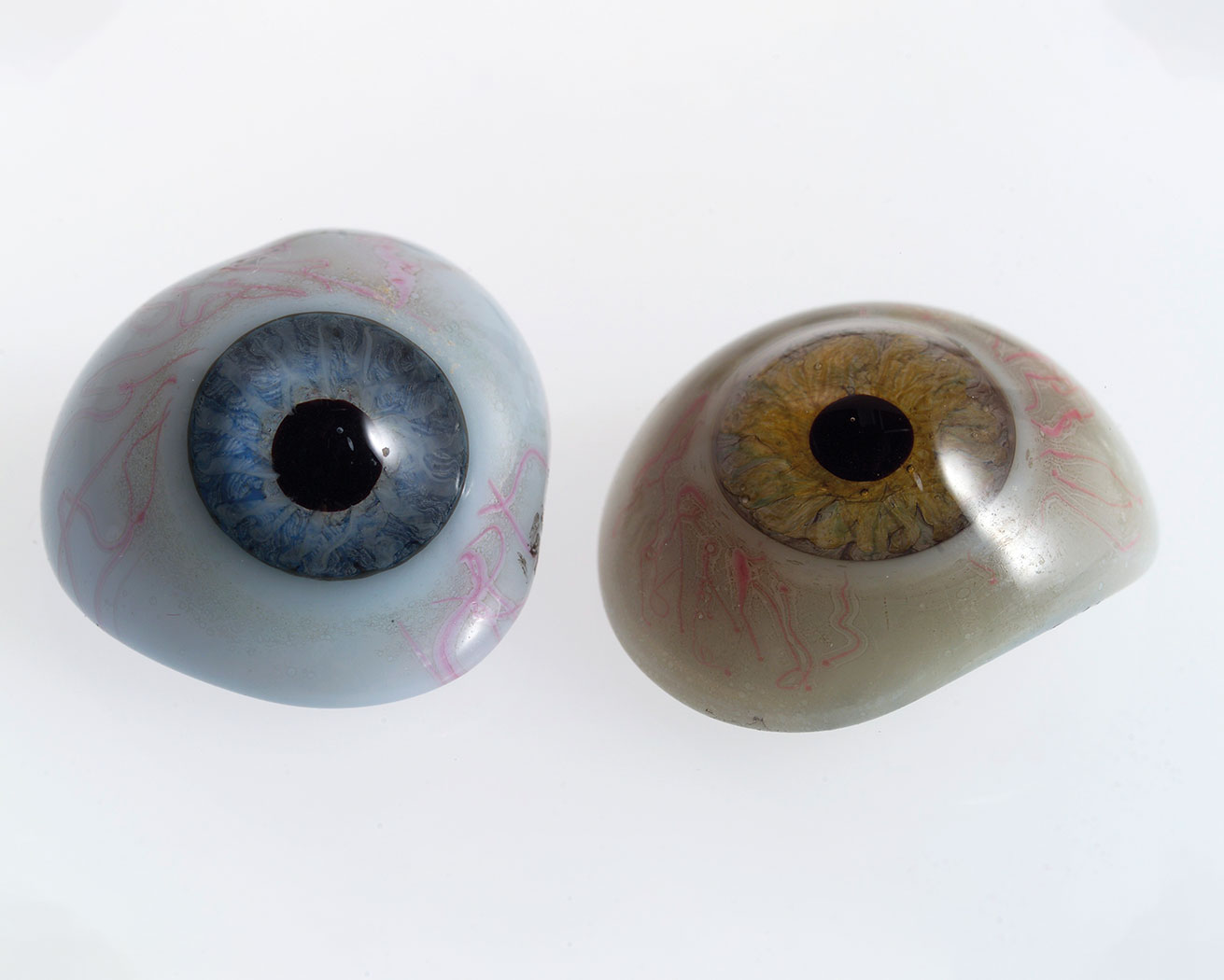
Ready-made prosthetic eyes are artificial eyes that are pre-manufactured, with standard sizes and color options. The purpose of these prostheses is to help the patient regain facial aesthetics and symmetry after the loss of an eye or when the eye is surgically removed.
Pre-manufactured Structure: Factory-made ready-made prosthetic eyes are produced in standard sizes, and since they are not custom-made, there is no need to match them with individual measurements and colors for each patient. Patients who prefer this type of prosthesis should be aware of this beforehand.
Cost and Affordability: Compared to custom-made prosthetics, ready-made prosthetic eyes are generally a more economical option.
Temporary or Permanent Solution: Depending on the urgency of the patient’s condition or the difficulty of creating a custom prosthetic eye, factory-made prosthetic eyes can be used as a temporary or permanent solution.
Material: Ready-made prosthetic eyes are generally made from materials like acrylic, and coloring is applied to mimic the natural appearance of the eye.
There are many types of prosthetic eyes. Factors such as the patient’s age, health, eye condition, and cost contribute to determining which prosthetic eye will be most suitable for them.
Custom prosthetic eyes, especially in terms of aesthetics and comfort, provide better results. However, considering cost and time constraints, ready-made prosthetic eyes can also be preferred for emergency or temporary solutions.
So, what differences arise between the most commonly preferred prosthetic eye options, such as ready-made prosthetic eyes and custom prosthetic eyes? What are the pros and cons? Who should choose which prosthetic eye?
These are some of the reasons why prosthetic eyes may be preferred. If you or a loved one needs to use a prosthetic eye due to any of these reasons, you can visit our Renk Prosthetic Eye Center for a consultation and learn about the custom treatment options and the most suitable affordable prosthetic eye choices offered by our expert team.
Prosthetic eye surgery requires an initial examination and evaluation by oculoplasty specialists. If the patient is deemed suitable, surgical techniques are used to position the eye muscles, and an implant is placed into the eye socket. After the implant is placed, surgical stitches are applied, ensuring the eye remains in the correct position. If damage has occurred around the eye after surgery, the tissues can also be corrected if the doctor deems it necessary.
Prosthetic eyes can vary in durability depending on their type and the material used. Additionally, how the patient uses the prosthetic eye and how often it is maintained directly affect its durability. Let’s examine the material used and the durability of the prosthetic eye.
Prosthetic eyes are generally made from acrylic (PMMA – Polymethyl Methacrylate), although some older models were made from glass. However, in modern times, acrylic prosthetic eyes are more commonly used.
Acrylic prosthetic eyes can last between 5 to 7 years with proper care and regular checkups. However, in some cases, they can last 10 years or longer.
Prosthetic eyes can show wear or color changes over time depending on usage.
Glass prosthetic eyes are more fragile and have a higher risk of breaking, so they tend to have a shorter lifespan.
Prosthetic eyes offer long-term use when properly maintained. They need to be cleaned daily and regularly polished. The patient’s usage habits are another factor that directly affects the lifespan of the prosthesis. Incorrect use (e.g., dropping it, contact with hard objects) can shorten its lifespan. Changes in the body’s anatomy also affect the lifespan of prosthetic eyes. For example, over time, changes in the eye socket structure may occur, necessitating the replacement of the prosthesis. With prolonged use, micro scratches may appear on the surface of the prosthesis. These scratches can lead to bacterial buildup, so polishing should be done periodically.
Prosthetic eyes accumulate proteins on their surface over time. Therefore, it is very important to wash off the accumulated proteins once a month. Unclean prosthetics can cause damage to the eyelids and eye socket over time. It is recommended not to exceed a month without cleaning the prosthetic.
Cleaning the prosthetic eye can be done in the following steps:
The prosthetic eye surgery process can be considered in two stages: the surgery stage and the prosthetic manufacturing stage.
Surgery Stage
For the prosthetic eye to sit properly and move in harmony with the eye and eyelids, the eye socket must be ready for the prosthetic. Most patients requiring a prosthetic have either very small eyes, anatomical deformities, or very large eyes.
During this stage, the internal eye tissues are removed surgically, and a spherical substance, called a “spherule,” is placed inside the eye. Surgeries are usually performed under general anesthesia. The duration of the surgery depends on the patient’s condition, but it generally lasts between 30 minutes to an hour. After the surgery, patients can typically be discharged the same day without needing to stay in the hospital.
Prosthetic Manufacturing Stage
Patients who have successfully gone through the first stage can move on to the prosthetic manufacturing stage about 2 months after the surgery.
After the surgery, there may be some swelling and redness in the eyes, which is normal. Swelling and redness usually subside after about a week to ten days. Most patients are discharged on the same day after surgery, but in some cases, an additional day in the hospital may be required.
Dissolvable stitches are commonly used in the surgery. These stitches dissolve and fall off naturally after about one to one and a half months. Generally, two months after the surgery, the eye socket heals and becomes suitable for the prosthetic. After this stage, the prosthetic manufacturing process can begin.
This is one of the most common and important questions asked by our patients. It should be noted that a prosthetic eye never moves like a natural eye. However, with certain surgical techniques and provided that the patient’s eye is suitable for this condition, a prosthetic eye can be given some movement.
Certainly, a ready-made prosthetic eye, also known as a pre-fabricated prosthetic eye, can be used. However, we would not recommend a ready-made prosthetic eye as your first choice. The reason is that the fit and balance between the prosthetic and the eye socket are crucial. If there is an imbalance, over time, the underlying eye, eyelids, and the cavity inside the eyelid (known as the fornix) may be damaged. Eventually, the prosthetic may become unusable.
Colored Prosthetic Eye

We offer a high satisfaction guarantee with custom-designed, natural, and comfortable ocular prostheses!

We provide the highest satisfaction with custom-designed, natural, and comfortable ocular prostheses crafted by our expert designers.

With our 24/7 WhatsApp support service, get instant assistance from our expert designers and discover your custom ocular prosthesis solution right away.


 English
 Türkçe
 العربية