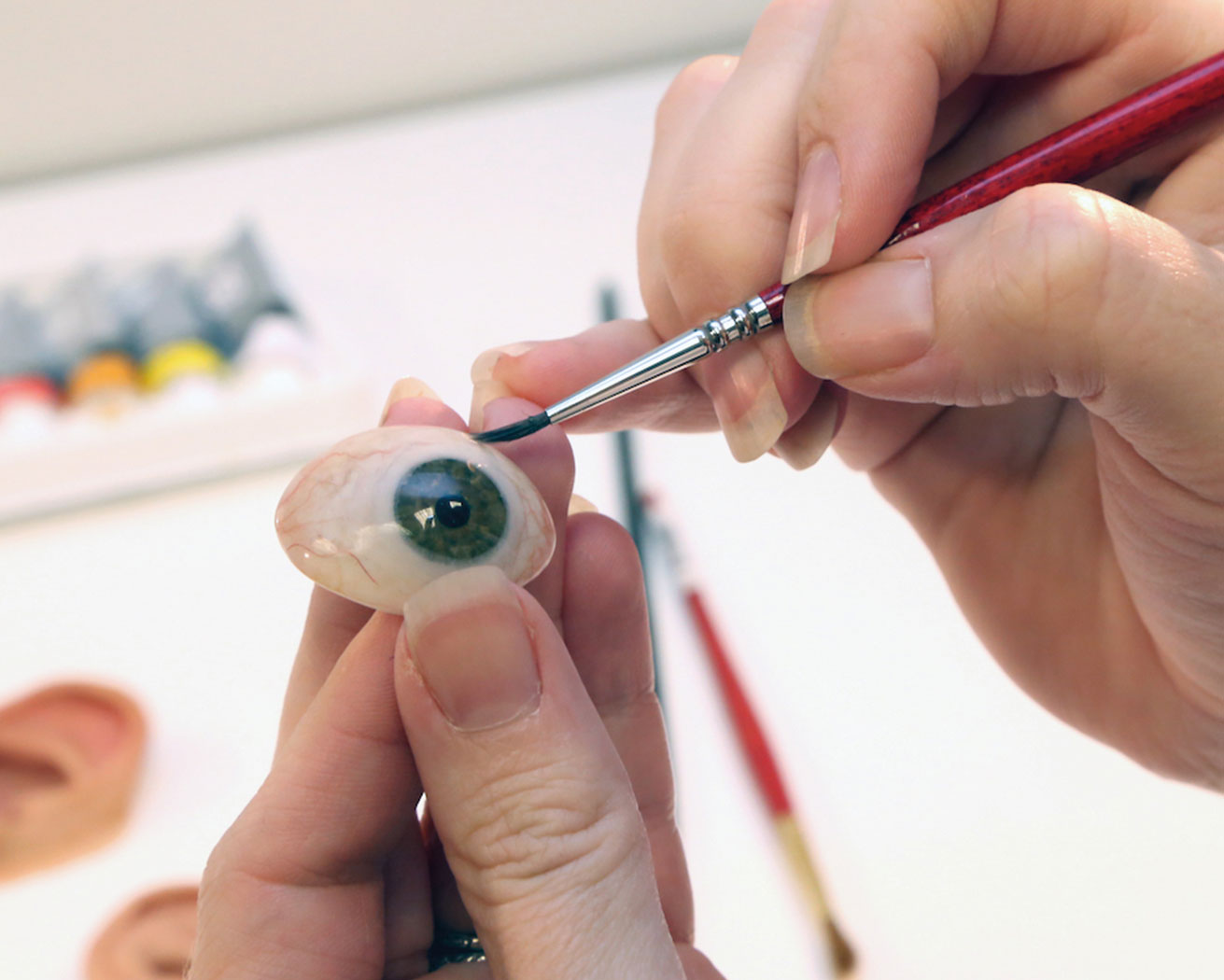
Prosthetic eye is a procedure applied for aesthetic purposes to individuals who were born without an eye, have undergone surgery, have a deformity in their eye, or have lost an eye for any reason. It does not contribute to visual function.
There are many types of prosthetic eyes depending on the purpose of use or need. These prosthetics vary according to the results of a detailed examination conducted by doctors, and the most suitable procedure is performed for the patient. This process is both a physiological procedure and has a strong social impact. Since eyes are the most prominent part of our face, it is a process that must be carried out meticulously.
Every person’s eye is unique. Therefore, one of the best options is a customized prosthetic eye that is made based on the individual’s natural eye color, shape, and other unique features. Custom prosthetic eyes, also referred to as moving prosthetic eyes, aim to provide the closest appearance to the person’s natural eye.
Customized prosthetic eye production requires a careful and detailed preparation process. This preparation process proceeds in the following steps.
The first stage of customized prosthetic eye production involves a detailed examination of the patient’s eye socket, followed by an assessment of suitability. During the process, an ophthalmologist and a prosthetics specialist will examine the anatomical structure of the eye socket and plan accordingly to achieve the best result.
Taking an exact mold from the patient’s eye socket is a critical stage for ensuring the prosthesis fits the patient perfectly. This procedure allows the measurement to be taken easily using biocompatible materials such as silicone or alginate.
A wax or paraffin model is created based on the mold taken from the patient. This model is then tried on the patient to check for fit and comfort. Once the fit is approved by the doctor, the prosthesis is produced from acrylic material and hardened.
Customized prosthetic eyes must also appear natural aesthetically. Therefore, the prosthetic’s iris color is hand-painted based on the healthy eye of the patient. The vascular structure of the eye is also carefully drawn to provide a realistic appearance. The aesthetic prosthetic eye appearance is achieved.
After the production of the custom prosthetic eye is completed, it is applied to the patient, and the movement and comfort are checked. Final adjustments are made, and the prosthesis is then ready for use.
Prosthetic eye care is the most important phase that requires meticulous attention. In this case, hygiene is of utmost importance. The prosthesis must be cleaned periodically and a specialist should be consulted. In case of wear or color changes, renewal or adjustments can easily be made.
Prosthetic eye surgery requires regular and hygienic care to minimize the risk of infection and extend the life of the prosthesis. The patient should follow a routine and pay attention to the following prosthetic eye care tips:
How is a prosthetic eye inserted? When inserting the prosthetic eye, it is important to ensure that the environment is hygienic.
Follow these steps to insert a prosthetic eye:
The procedure may seem difficult, but after a few attempts, it will become easy for the user to perform.
There are many different types of prosthetic eyes, depending on the material used, the patient’s needs, and the purpose of use. One of the most commonly used types is the acrylic prosthetic eye. These prosthetics are light in weight, durable, and have a natural aesthetic appearance, making them one of the most preferred choices. Additionally, they are easy to clean and have a long lifespan, making them an ideal solution for many patients.
Another option is the silicone prosthetic eye. Due to the flexible structure of silicone, it helps the prosthetic fit better into the eye socket. It can provide ease of use, especially for individuals with sensitive eye structures. Thanks to its flexibility, it may also provide better mobility for some patients.
A more advanced option is the implant-supported prosthetic eye, which is supported by surgically placed implants to sit better in the eye socket. These prosthetics help the eye move more naturally and offer better compatibility with facial movements. However, this type of prosthesis requires surgical intervention, making the application process more complex.
Cosmetic prosthetic eyes are a type of prosthetic designed for patients who have vision loss but have a healthy eye socket. These prosthetics, also known as aesthetic prosthetic eyes, are used to provide a natural appearance for cosmetic purposes. They are custom-painted to match the existing eye perfectly.
Full eye prostheses are designed for patients with a completely empty eye socket. These prosthetics cover the entire eye socket, helping to maintain facial symmetry and significantly improving the patient’s aesthetic appearance.
Finally, partial (half) prosthetic eyes are used when part of the eye is preserved. They only fill in the missing part. These prosthetics are specially designed to achieve a natural appearance and maintain facial symmetry.
The lifespan of prosthetic eyes can vary depending on the quality of care, the material used, and the healing status of the eye socket. Generally speaking, a well-maintained prosthetic eye can last between 5 to 7 years. However, during this time, issues such as color changes, wear, or incompatibility may arise. If such changes are noticed, the patient should immediately consult a prosthetic specialist for necessary adjustments.
Regular cleaning and maintenance are essential to prolong the life of prosthetic eyes. By following the doctor’s instructions, the prosthetic should be cleaned daily with mild soap or special cleaning solutions, and chemicals should be avoided. Additionally, the prosthetic should be checked by a prosthetics specialist at least once a year to evaluate its fit and overall condition. If significant wear or deformation occurs, the prosthetic may need to be replaced.
A prosthetic eye is an artificial eye placed in the eye socket after the loss of a natural eye to provide both an aesthetic and psychological solution. So, do prosthetic eyes move? Do they have the ability to move like natural eyes?
Prosthetic eyes generally do not have the ability to move like natural eyes, although this can vary depending on the condition of the muscles in the eye socket and the type of prosthesis.
Traditional prosthetic eyes are typically placed in the eye socket and remain fixed. They can shift slightly with the movement of the eyelids. This is because the prosthetic eye is not directly connected to the natural eye muscles.
It is certainly necessary to accept that this movement can never be at the same level as the natural eye’s mobility. Patients can look in specific directions with a prosthetic eye and make small movements, though limited, but they should not expect wide-ranging movement capabilities.
Additionally, one point that should be emphasized is that the mobility of the prosthetic eye depends on many factors such as the technique used by the prosthetics specialist to place the eye, the weight of the prosthetic material, and the anatomical structure of the eye socket. For example, some patients may have limited movement ability of the prosthetic eye because the muscles around the eye socket have weakened over time or are entirely weak.
For patients with a healthy eye socket, implant-supported prostheses can provide much better mobility. Increasing the movement ability of people using prosthetic eyes depends on the support given by the patient and their family. It is recommended to attend regular ophthalmologist check-ups, strictly follow prosthetic care instructions, and renew the prosthetic when necessary.
Furthermore, individuals with a prosthetic eye can perform specific exercises in front of a mirror to understand how their eye moves or how it appears aesthetically. This process will contribute not only to the patient’s psychological adjustment to the prosthesis but also to regaining their self-confidence.
In summary, people with a prosthetic eye may have very limited movement ability, which is often not noticeable by others. However, for patients who wish to have more movement space, implant-supported solutions might be a more suitable option.
It would be wrong to claim that prosthetic eyes are completely immobile. It should be noted that they have limited movement compared to a natural eye.
In other words, traditional prosthetic eyes can often shift slightly with the movement of the eyelids, but implant-supported prostheses offer better mobility. The extent to which prosthetic eyes can be moved varies from patient to patient, and it is crucial to work with an expert ophthalmologist and prosthetic specialist to achieve the best results.
Individuals who experience vision loss can face many challenges in their daily lives. Anxiety, mood disorders, and social isolation are just a few of them. Therefore, it is essential that individuals do not neglect their psychological well-being and seek psychological support to maintain their daily lives.
With the development of technology, many modern rehabilitation techniques have emerged to support individuals who have lost their vision. Initially, they may face difficulties in moving independently or maintaining daily activities. However, with the use of a cane, Braille, and directional signs, they can adapt more easily to life.
The process of reintegrating into social life after vision loss is also crucial. In this process, family members and friends have significant responsibilities. Approaches aimed at increasing the person’s self-confidence, especially through activities such as sports, music, and art, will help strengthen their productivity.
Although life after vision loss is difficult, with appropriate rehabilitation, eye prostheses, and psychological support, individuals can maintain their independence and re-adapt to social life.
Prosthetic eyes can have various positive and negative psychological effects on individuals. Firstly, discussing the positive effects, prosthetic eyes reduce anxiety by providing aesthetic harmony and increase the person’s self-confidence. They help individuals feel more comfortable in social settings and strengthen their communication with others. For individuals who have lost an eye or were born without one, changes in appearance can create significant psychological burdens, but with the help of a prosthetic eye, this situation can be greatly balanced.
However, in the initial period of using prosthetic eyes, individuals may experience difficulties in adjusting. Some patients may find the prosthetic eye unfamiliar both psychologically and visually and may struggle to accept this process. This can be more intense for individuals who lost their eye at a young age or during childhood.
In such cases, not only the patient but also those who support them should become more aware of the process. To provide more effective help to the patient, they can participate in supportive therapies or motivating activities such as psychological counseling.
In addition, regular consultations with prosthetic specialists and maintaining communication can make it easier for patients to adjust to their prosthetic eyes. Contacting support groups and individuals with similar experiences will also help in easing this process. Since accepting the use of a prosthetic eye and regaining self-confidence requires time, all necessary support and opportunities should be provided without rushing.
Many factors affect the prosthetic eye prices. These include the design, material, the patient’s condition, the technology used, and the production process. Additionally, country or region, the experience of the prosthetic eye specialist, and clinical or laboratory expenses play a significant role in determining the price of the prosthetic eye.
Prices vary according to the person’s needs and expectations, and they are typically designed as custom prosthetic eyes. Since each patient’s condition and needs are different, it is difficult to provide an exact price for prosthetic eye prices.
If you’re researching where the best prosthetic eye center in Turkey is, we invite you to visit Renk Prosthetic Eye center, where specialists in the field work. At our highly-rated prosthetic eye center in Istanbul, you can learn about the most suitable prosthetic eye option for your needs and budget based on a personalized evaluation.
Colored Prosthetic Eye

We offer a high satisfaction guarantee with custom-designed, natural, and comfortable ocular prostheses!

We provide the highest satisfaction with custom-designed, natural, and comfortable ocular prostheses crafted by our expert designers.

With our 24/7 WhatsApp support service, get instant assistance from our expert designers and discover your custom ocular prosthesis solution right away.


 English
 Türkçe
 العربية