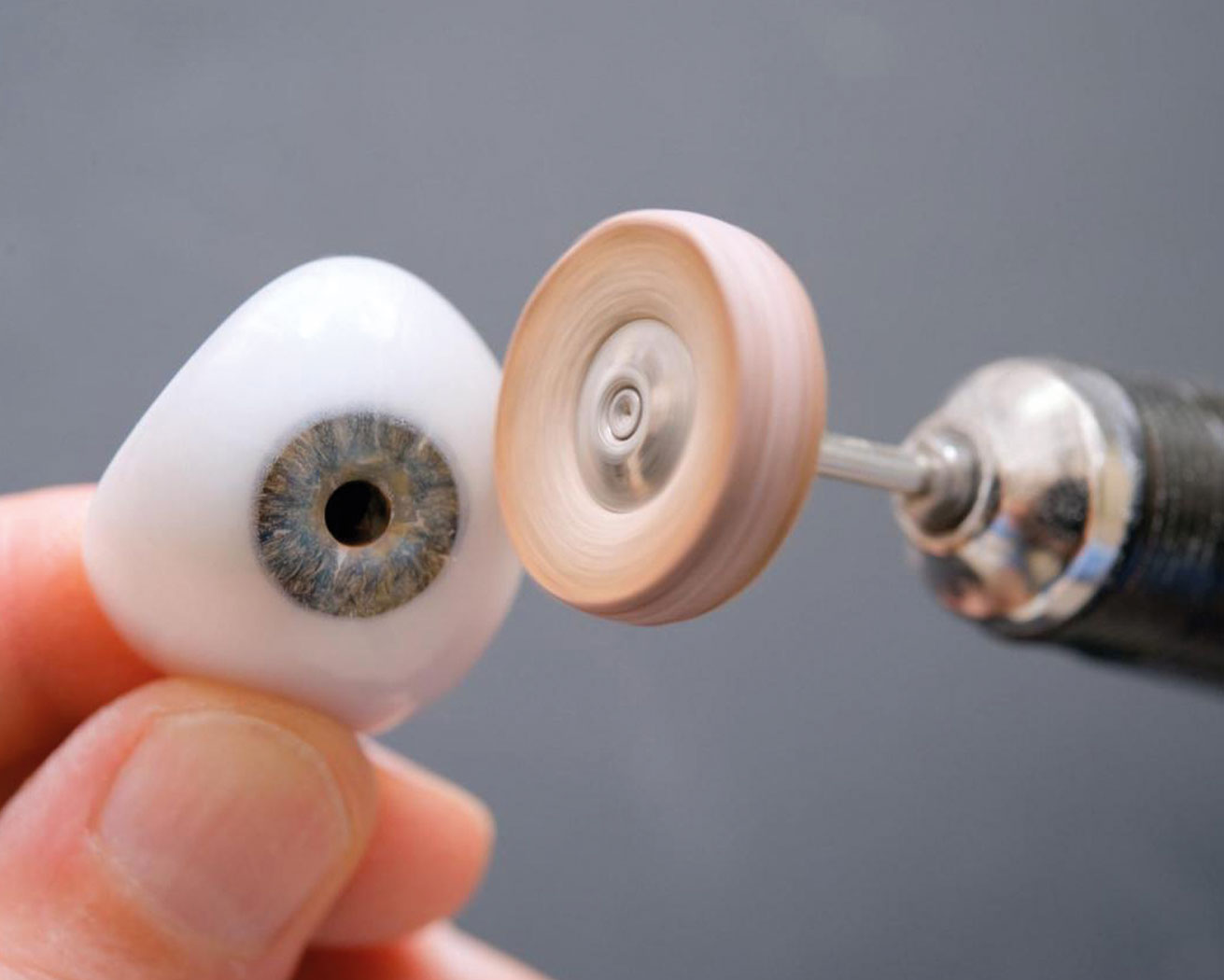
An ocular prosthesis is used for individuals who have lost their vision due to various reasons (accidents, tumors, glaucoma, etc.) or those born with an empty eye socket. It helps fill the eye socket, prevents developmental disorders, protects the exposed area from external factors, and ensures that the surrounding eye bones develop normally. Ocular prostheses provide a better aesthetic appearance and are designed to move in coordination with the eye muscles. These prostheses are made of materials that do not break, deform, or undergo damage.
Ocular prostheses come in two main types, depending on the patient’s budget and needs:
Custom-made ocular prostheses offer a high degree of movement. If the eye muscles remain strong, the prosthesis is designed to contact the muscles directly, allowing it to reflect a significant amount of natural movement.
Modern ocular prostheses are made from two primary materials:
Bio-Acrylic is derived from 100% natural materials, making it healthy, homogeneous, durable, and fully compatible with the human body. It lasts longer and is considered healthier compared to porcelain prostheses.
Porcelain prostheses, which are imported as they are not produced in Turkey, are more fragile and have a shorter lifespan compared to Bio-Acrylic prostheses.
Any patient who has lost vision and has had their eye socket cleared surgically is suitable for an ocular prosthesis.
First, high-resolution photographs of the patient’s eye color are taken and transferred to a digital environment. Blood vessel patterns and eye color are digitally matched. This method allows for a quicker, more accurate color match without requiring long patient waiting times. Every detail of the eye color is accurately replicated for a highly similar appearance.
Next, special mold techniques are used to model the eye socket. The symmetry of the cornea (focal point) is determined, and after fitting sessions, if there is no infection or discharge within 2-3 days, the prosthesis is fitted. The patient experiences no pain or discomfort during the procedure.
The Bio-Acrylic material we use is medical-grade acrylic, fully compatible with human health. There is no risk of breakage or deformation. The colors used in the prosthesis will not fade, and the prosthesis can be modified (enlarged or reduced). Its anti-allergic properties ensure long-term durability without losing its effectiveness.
Approximately three months after the prosthesis is fitted, the patient is invited for a follow-up visit. Any problems are addressed during this visit. If there are changes in the eye socket (enlargement or shrinkage), adjustments are made, and the prosthesis is polished before being refitted. These services are provided free of charge.
While cleaning frequency depends on the patient’s body, it is typically sufficient to remove the prosthesis once a month and clean it with warm water and baby shampoo.
We recommend that you sleep with the prosthesis in place.
Yes, you can swim, shower, and even exercise with an ocular prosthesis.
There is always a slight chance of discharge with an ocular prosthesis. If the prosthesis does not fit well, the likelihood of discharge increases.
Approximately one month after surgery, once the swelling in your eye socket subsides, the socket will be ready for the prosthesis.
Colored Prosthetic Eye

We offer a high satisfaction guarantee with custom-designed, natural, and comfortable ocular prostheses!

We provide the highest satisfaction with custom-designed, natural, and comfortable ocular prostheses crafted by our expert designers.

With our 24/7 WhatsApp support service, get instant assistance from our expert designers and discover your custom ocular prosthesis solution right away.


 English
 Türkçe
 العربية